
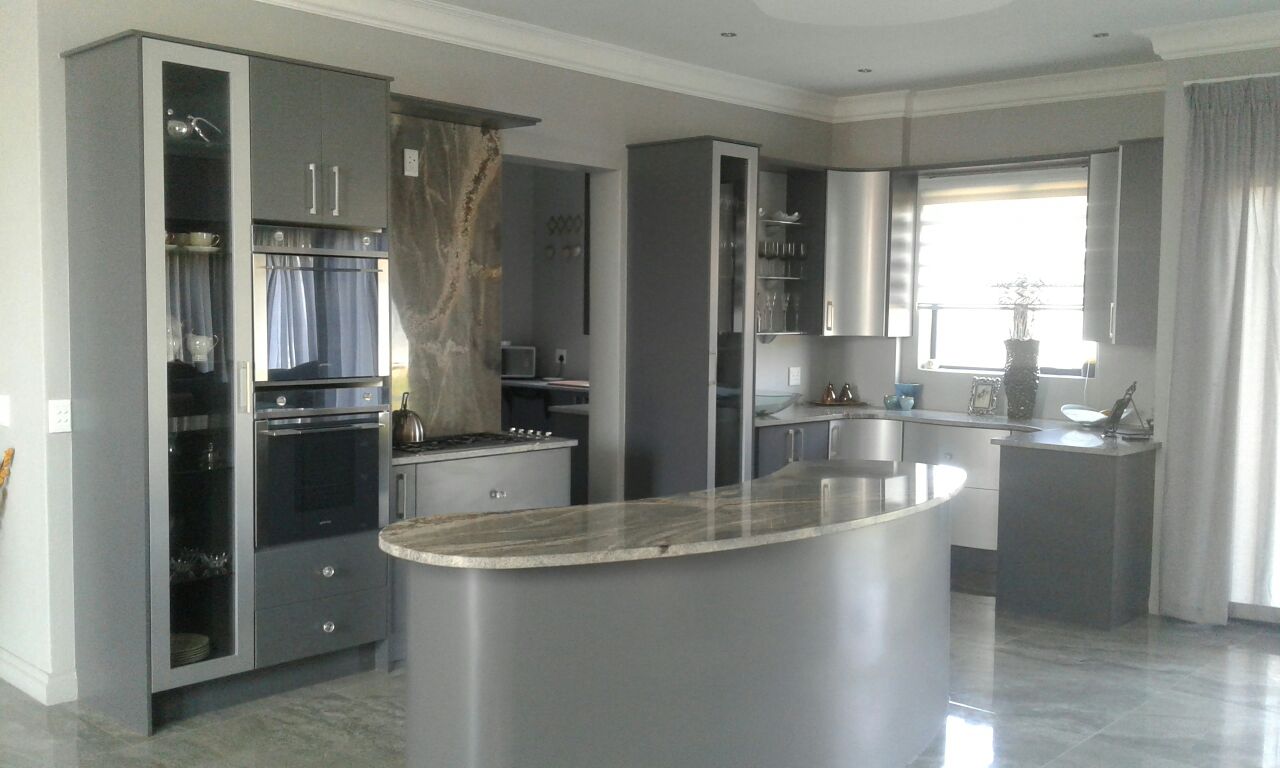
Melamine & Duco Combination


Why choose Melamine?
Melamine is an ideal choice for kitchen, built-in-cupboards, vanities and much more. Melamine is available in different surface finishes, smooth – Mat finish and Wood grain finish.
The board still needs to be edged, and we edge the carcass with 0.4mm edging and the doors / drawer fronts with 2mm pvc edging.
This is a very popular, durable and cost effective product.
Melamine & Duco Combination:
How is Melamine & Duco Combination Manufactured?
To begin with, Melamine & Duco Combination, they make melamine boards of a special craft paper.
Which does not get soggy / tear, then it is soaked in a resin called phenol?
Therefore, these sheets are put on the wood.
As soon as these products are ready, it sends them to a press.
As it lays the laminate sections in the press.
Also, it sets a metal sheet between them to prevent the layers from sticking to each other.
Under high heat and pressure, the sheets of decorative laminate.
And it makes the saturated melamine craft paper into laminated sheets of melamine.
It stacks the metal sheets that are set in as the layers.
Before pressing may contain designs of wood grain or stone texturing.
After the press, it completely cures the laminate layers.
The finishing line trims and sands the sheets.
This ensures proper adhesion when combined with the MDF or plywood substrates.
Melamine & Duco Combination Cabinet Pros
Melamine is a popular option for cabinetry for several reasons.
It is durable, comes in a wide variety of colors, is inexpensive, and has a uniform finish.
These characteristics add up to make Melamine a serious contender to solid wood and MDF.
Melamine & Duco Combination Finish
Locally, “Duco finish” means a super-smooth, high-gloss, durable, automotive-grade paint job.
Applied to furniture or cabinetry, although the term has become much-abused over the past
20 years, with some applying the term to just any gloss-enamel finish.
As we apply it, it involves a tough-curing automotive body-filler/primer, diligent sanding.
Then at least two coats of color with fine sanding as necessary, a clear topcoat for gloss, and of
course, the proper time and temperature for curing to hardness.
Just like you’ll see being done for cars by some auto shops.
The term “Duco” comes from a DuPont automotive paint (Duco is short for DuPont Color),
Which dates back to the 1920s.
The local term “Duco finish”, as applied chiefly to furniture and cabinetry painting.
It has been around for as long as I can remember
—as far back as the late 60s, and may go back even farther.
Again, it all came from Dupont’s “Duco” automotive finishes.
Be the first to review “Melamine & Duco Combination”
Related products
Cupboards

Cupboards

Cupboards

Cupboards

Cupboards

Cupboards

Cupboards

Cupboards
Reviews
There are no reviews yet.